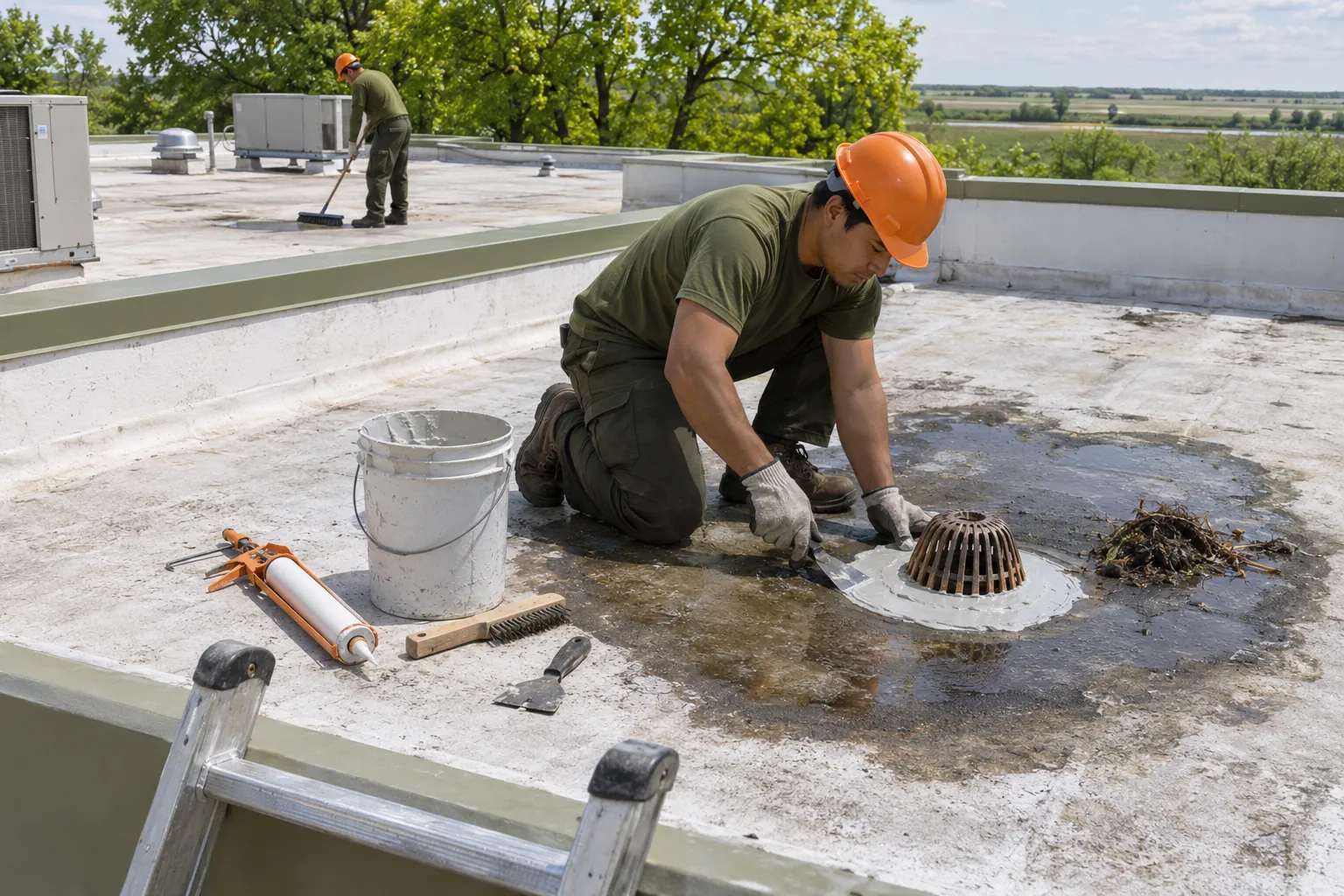
Flat Roof Repair
Office wings and low-slope warehouse sections get seam, puncture, and drain repairs on their membranes.
Flat roof repair in Kearney
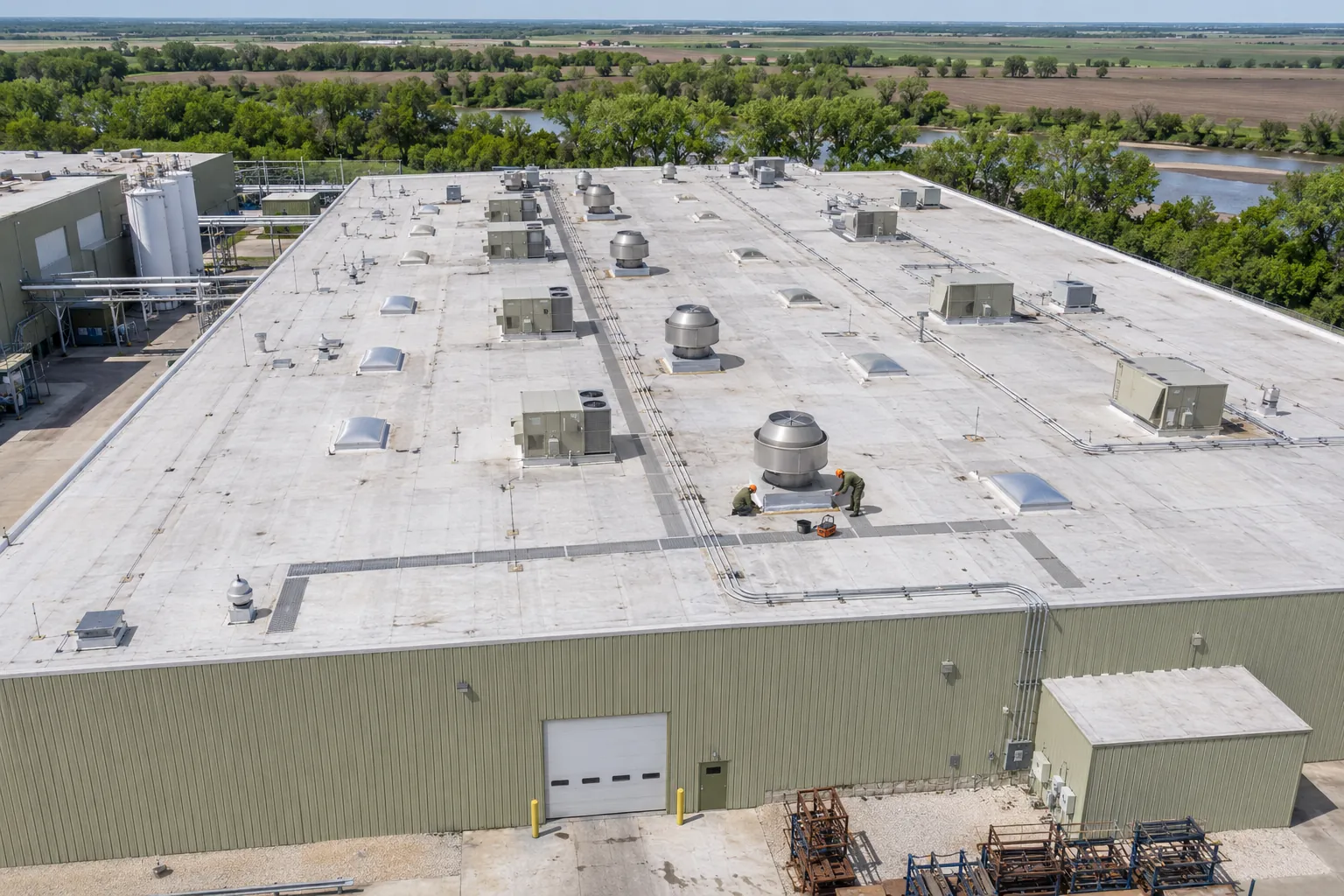
As a Kearney industrial roof repair contractor, we repair fan curbs, stacks, drains, and membrane on plant roofs, working within your safety rules and production schedule.
Kearney industrial roof repair fits plant roofs where damage clusters around equipment and process exhaust. When the membrane fails across the field, replacement planning starts instead.
Plant roofs wear around the equipment that sits on them. These are the failures we repair most on Kearney industrial buildings.
Grease or chemical discharge from the fan softens the membrane next to the curb and opens the flashing.
We repair with materials matched to the discharge and add containment where the fan keeps dripping.
Dust and debris from production settle on the roof and pack strainers until water backs up.
Strainers and bowls are cleaned, broken parts replaced, and the drain reset with new sealant.
Moist, warm exhaust condenses on nearby metal, so curbs, flashing, and panels rust faster there.
Rusted curbs get patched or replaced, and corroded flashing is cut out and renewed.
Heavy units and pipe stands shift and grind into the roof, wearing through the membrane at their feet.
We add or replace support pads and patch the worn membrane under each support.
Maintenance traffic to fans and units follows the same routes and scuffs the membrane thin.
Walkway pads go down along those routes after the worn areas are patched.
Each piece of plant equipment on the roof has its own weak point. This table shows where we look and how each one is repaired.
| Roof Detail | Common Damage | Repair | Plant Coordination |
|---|---|---|---|
| Exhaust fan curbs | Softened membrane, rusted curb | Compatible membrane, new curb | Fan lockout during work |
| Stacks and vents | Corroded flashing | New flashing and storm collar | Shutdown window if hot |
| Equipment supports | Worn membrane at the feet | Support pads and patches | Load moves with maintenance |
| Roof drains | Dust-packed strainers | Clean, reset, replace parts | Access through safety staff |
| Walk routes | Thin, scuffed membrane | Patches and walkway pads | Route agreed with maintenance |
A roof leak over a production line reaches equipment, stock, and schedules. Here is what each fix keeps away from the floor below.
Discharge-softened membrane at fan curbs opens up and drips straight onto lines and stock.
Compatible materials and containment keep the curb sealed while the fan runs.
Packed drains hold water on the roof, adding load and pushing it into seams.
Clean, reset drains move water off between maintenance visits.
Rust around vents and stacks spreads into the deck and insulation below the equipment.
Renewed flashing and patched curbs stop the corrosion where it starts.
Unlogged patches make it hard to tell whether a leak is new or the same one returning.
Every repair location goes into a log, so recurring problems show up as patterns.
Protect the line, then call us. Having these ready lets us plan safe roof access and materials for the first visit.
Plant roof work runs on your safety rules. Here is what the inspection covers and how the repair visit is sequenced.
With your safety staff, we set access and fall protection, then check every fan, stack, support, and drain on the roof.
Findings are photographed and ranked by risk to production, so leaks over lines and electrical rooms come first.
Fans and units are locked out as needed, and curbs, flashing, and membrane are repaired with discharge-compatible materials.
Scheduled visits clean drains, check sealant and pads, and log every repair location so patterns show early.
Plant campuses mix roof types. These repairs cover the offices, warehouses, and metal buildings beside the main plant.
Office wings and low-slope warehouse sections get seam, puncture, and drain repairs on their membranes.
Flat roof repair in Kearney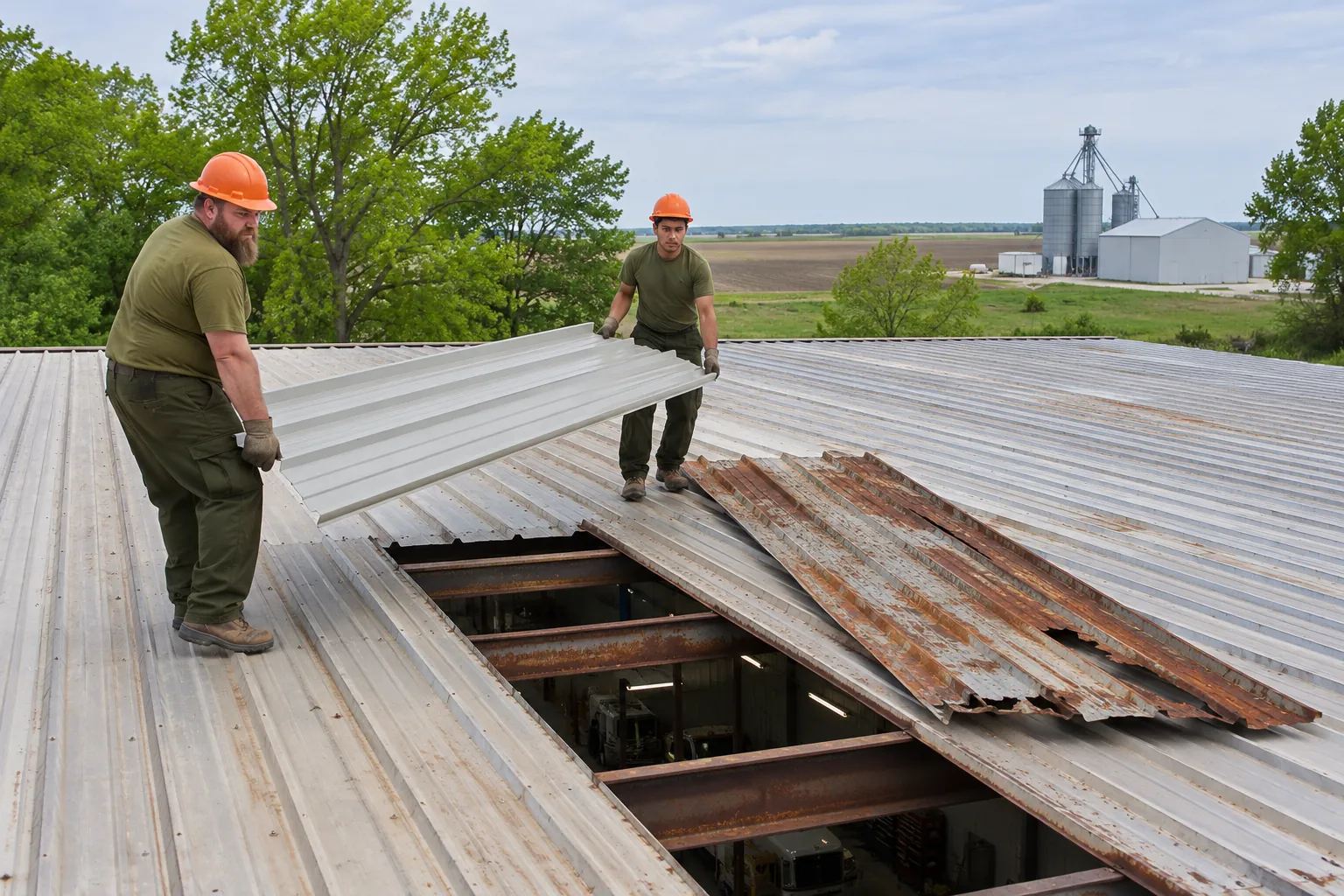
Metal storage and shop buildings on the property leak at screws and laps that need new fasteners and sealant.
Metal roof repair in Kearney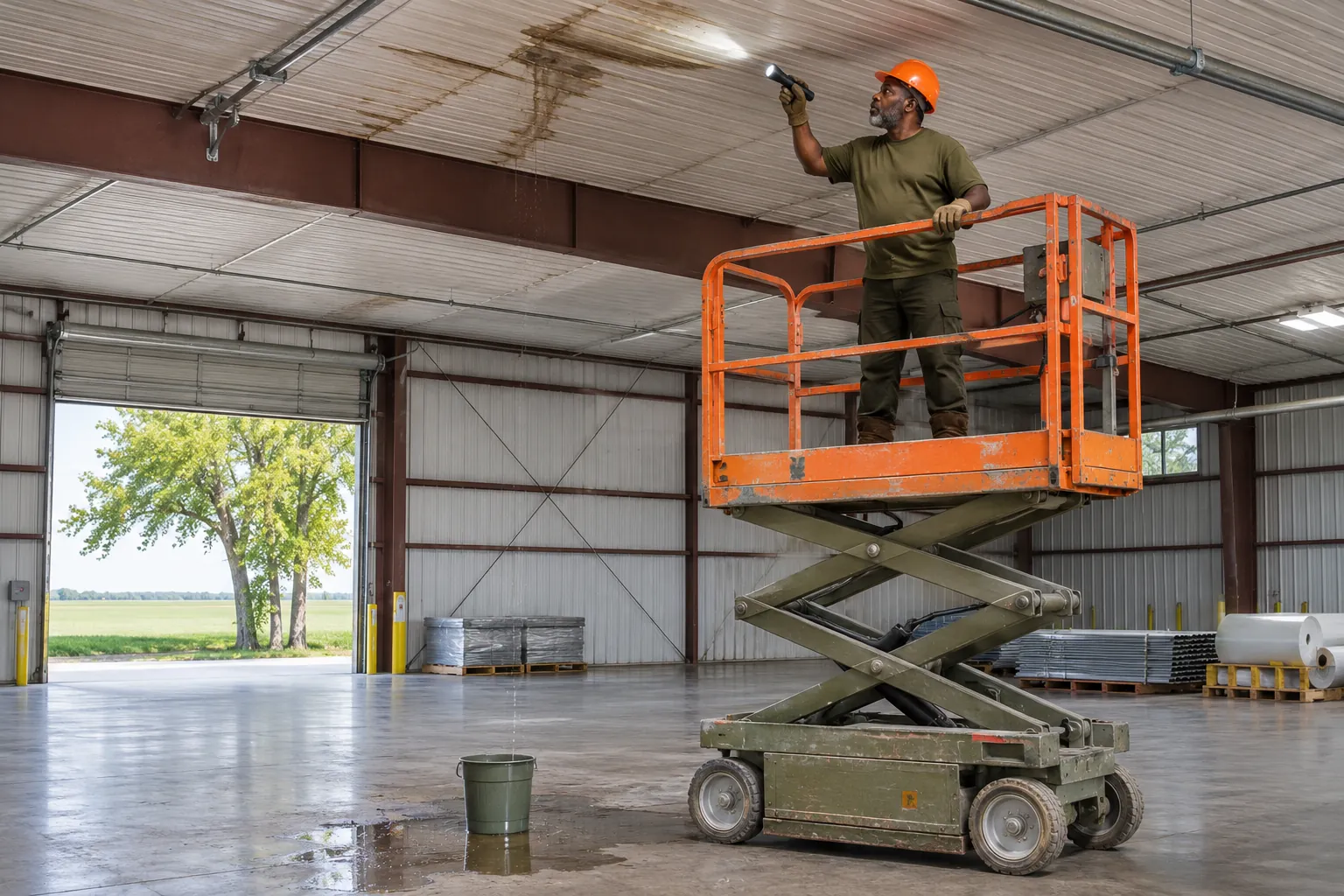
Leaks with no clear source above them get traced inside and out before any repair starts.
Roof leak repair in KearneyAnswers on exhaust fans, maintenance, inspections, and planning a repair visit at a Kearney plant.
At the curb flashing and the base of the fan. Grease and chemical discharge soften membrane near fans, so we use materials that hold up to it or add a containment system. Rusted fan curbs are patched or replaced, and the fan housing is resealed where it sits on the curb.
It covers scheduled inspections, drain cleaning, sealant checks, and small repairs made before they spread. Plants with dust or process exhaust need cleaning more often. Each repair location goes into a log so repeat problems show a pattern, and walkway pads and equipment supports get checked for wear each visit.
Everything in a standard roof check, plus the risks a plant adds. Access is set with your safety staff under your fall protection and restricted-area rules. We look for exhaust stains, corrosion near vents, overloaded supports, and drains clogged by dust, then rank findings by risk to production.
Have the roof access route, your safety rules, and the leak history ready. Tell us where leaks show, what equipment sits below, and what process exhaust is on the roof. Identify fans or units that need lockout. Roof drawings and past repair records help us bring the right materials the first time.
Yes. We repair industrial roofs in Kearney and in Holdrege, Minden, Gibbon, Ravenna, and Shelton, and plants just outside those towns can call to check coverage. Each visit starts with access and safety planning with your staff, then a full inspection of the roof and the equipment on it.
Tell us what equipment sits on the roof and where leaks show below. We will plan access with your safety staff and price the repair.