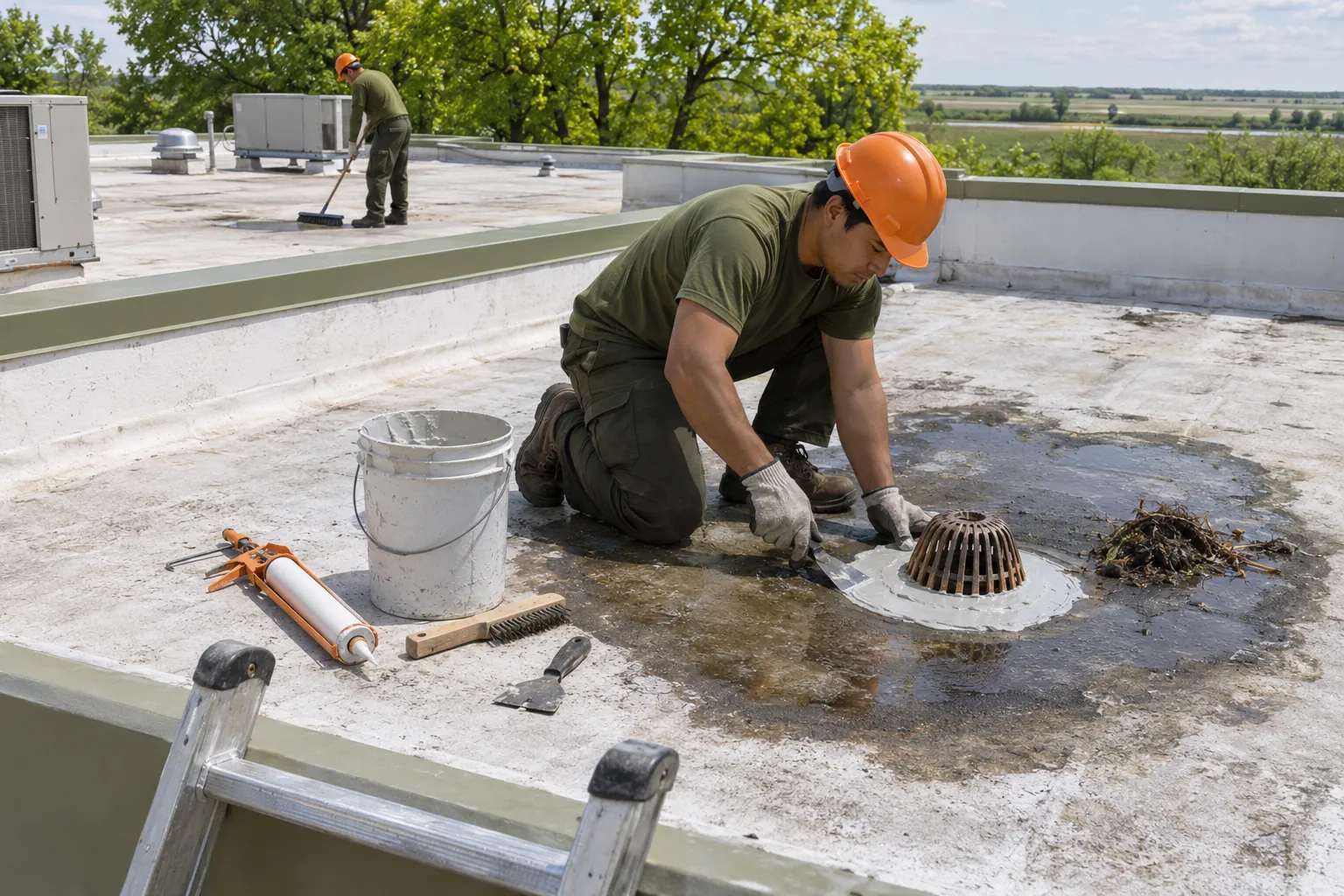
Flat Roof Repair
Cracked membrane, lifted edges, and torn flashing on flat roofs after hail and wind.
Flat roof repair
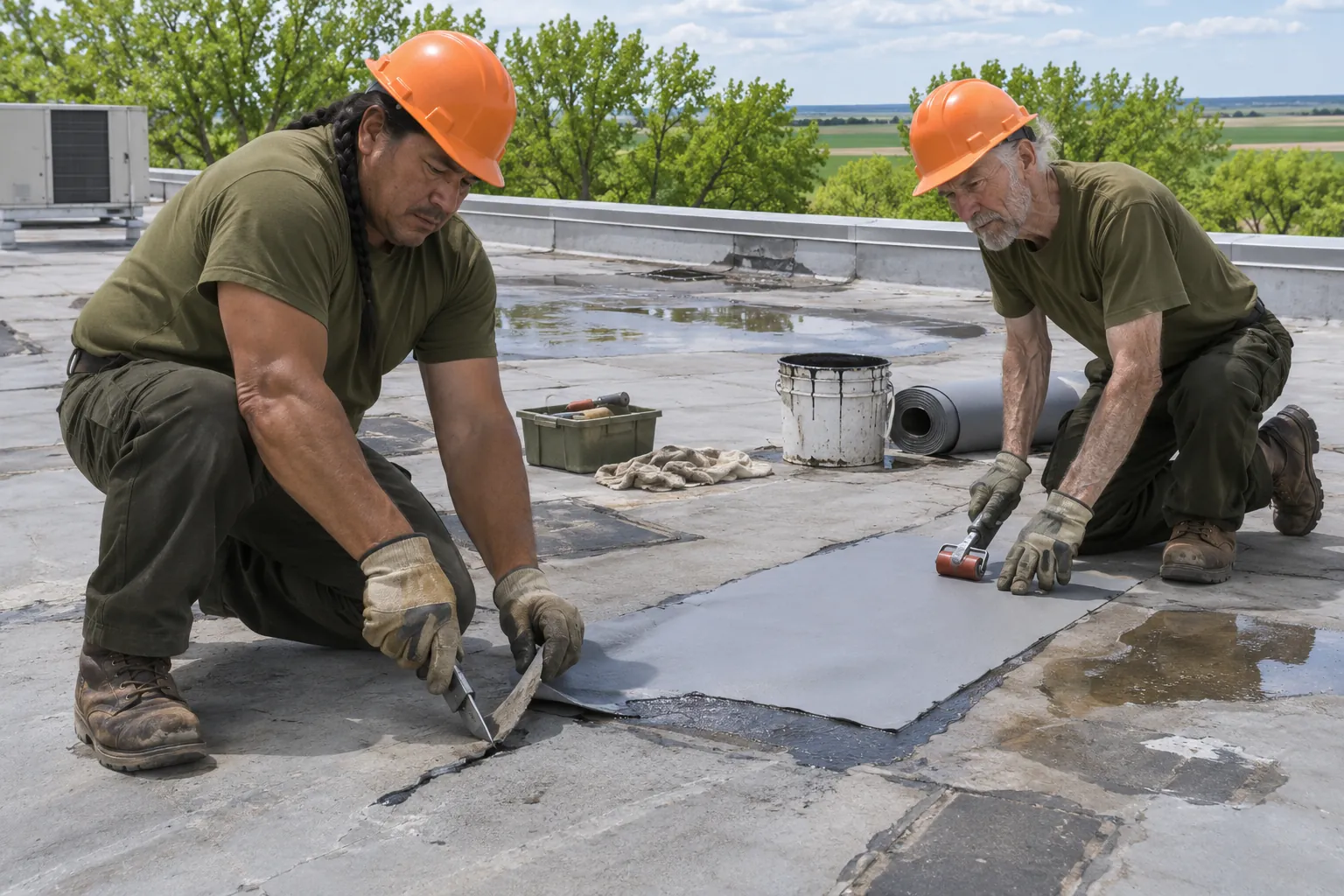
As a Minden commercial roof repair contractor, we inspect roofs after hail and wind, secure what moved, and repair the seams, flashing, and panels storms open up.
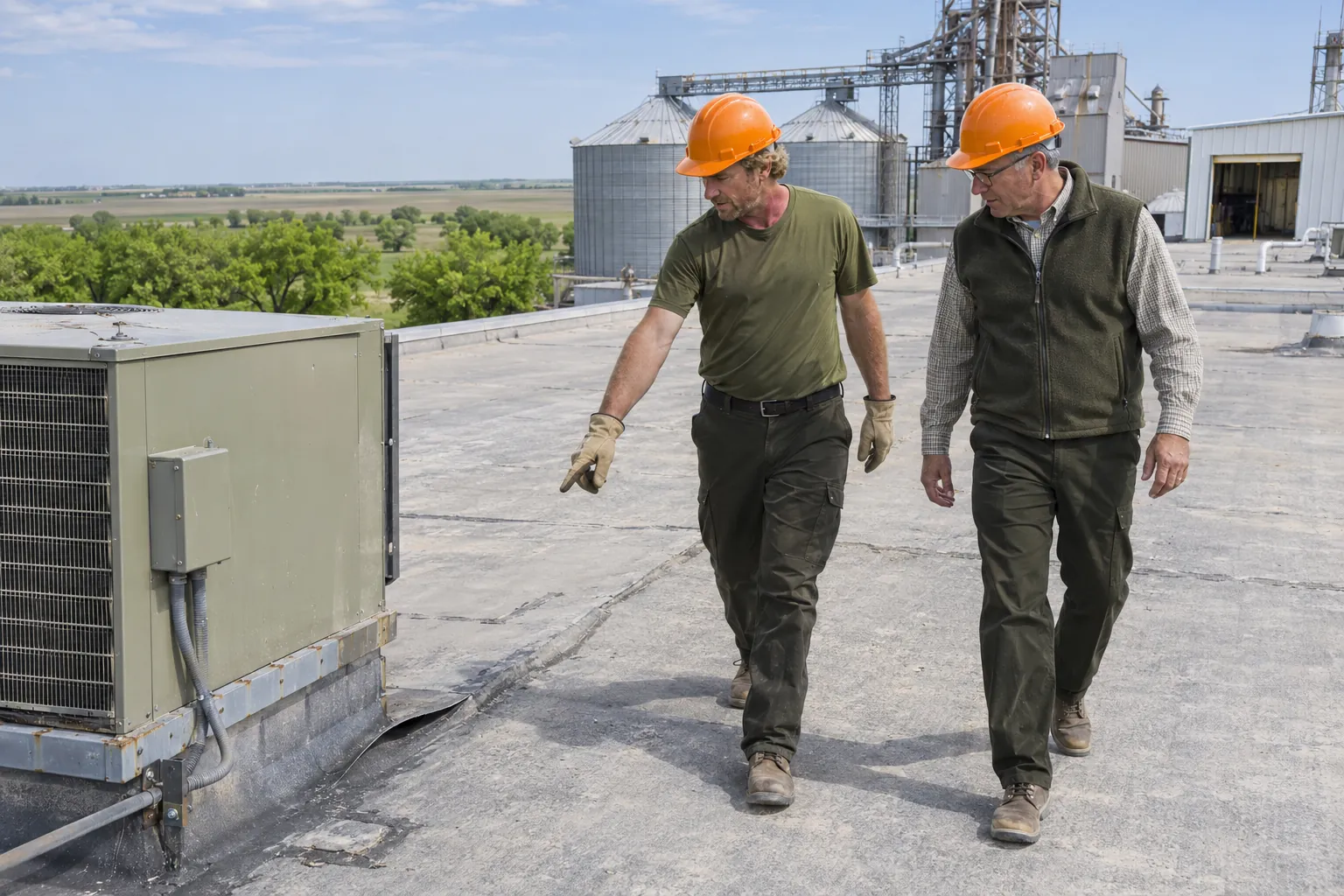
Minden commercial roof repair after a storm starts with the whole roof, because hail and wind seldom damage just one spot. Edges, flashing, and seams take the hits, and much of that damage is hard to see from the ground.
We secure loose edges and seal openings first to stop water, then plan permanent repairs once the full roof has been walked and photographed.
Storm damage shows up in a few places first. These are the problems we find and repair most often after Minden storms.
Wind uplift is strongest at corners and perimeters, so edge metal and coping fasteners pull out there first.
We refasten or replace the edge metal and coping and seal the membrane edge beneath it.
Hail stones bruise and crack single-ply and modified bitumen, often in spots that look fine from below.
Each impact gets marked, and cracked areas are cut back and patched with matching membrane.
Impacts bend panels at the laps and crack the sealant that kept the laps closed.
Laps are cleaned and resealed, and badly dented or split panels are replaced.
Gusts get under flashing at its top edge and peel it away from walls and unit curbs.
Flashing is reset, terminated with a bar or counterflashing, and sealed along the top edge.
Storm damage that sits until the next rain grows quickly. Here is what prompt repairs keep from spreading.
A lifted edge catches more wind with every gust and can peel back a whole roof section.
Secured edge metal holds the membrane down before the next storm.
Unrepaired cracks let water into insulation for months before a stain appears.
Marked and patched impacts keep the insulation dry.
Cracked lap sealant on metal roofs leaks a little more after each rain.
Resealed laps shed water the way they did before the storm.
Without photos, it is hard to show later what the storm did and what was fixed.
Dated photos of each impact and repair go into your building file.
All four of our repair services reach Minden. Storm work usually starts with leak tracing or flat and metal roof repairs.
Cracked membrane, lifted edges, and torn flashing on flat roofs after hail and wind.
Flat roof repair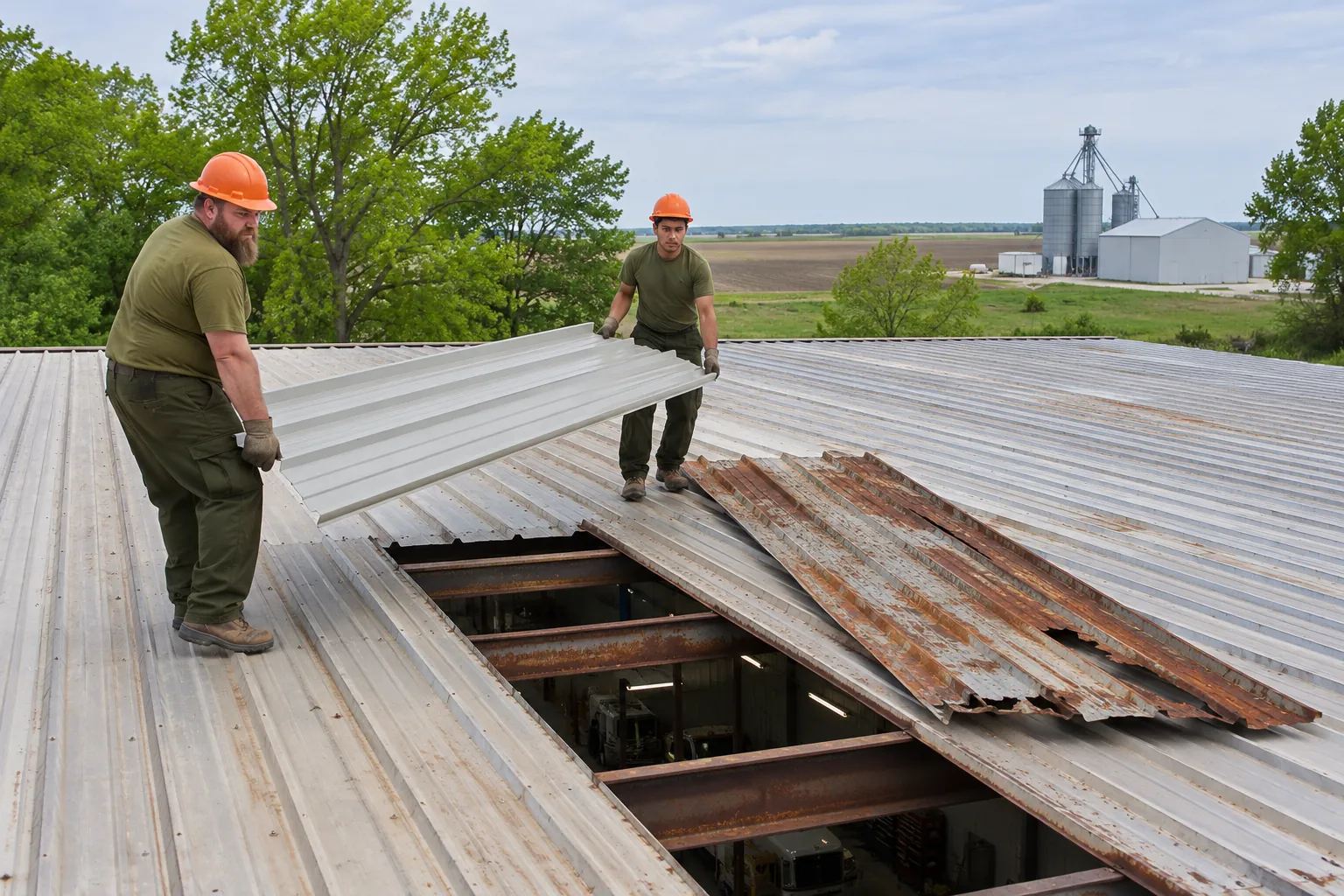
Dented panels, cracked lap sealant, and popped screws on metal buildings.
Metal roof repair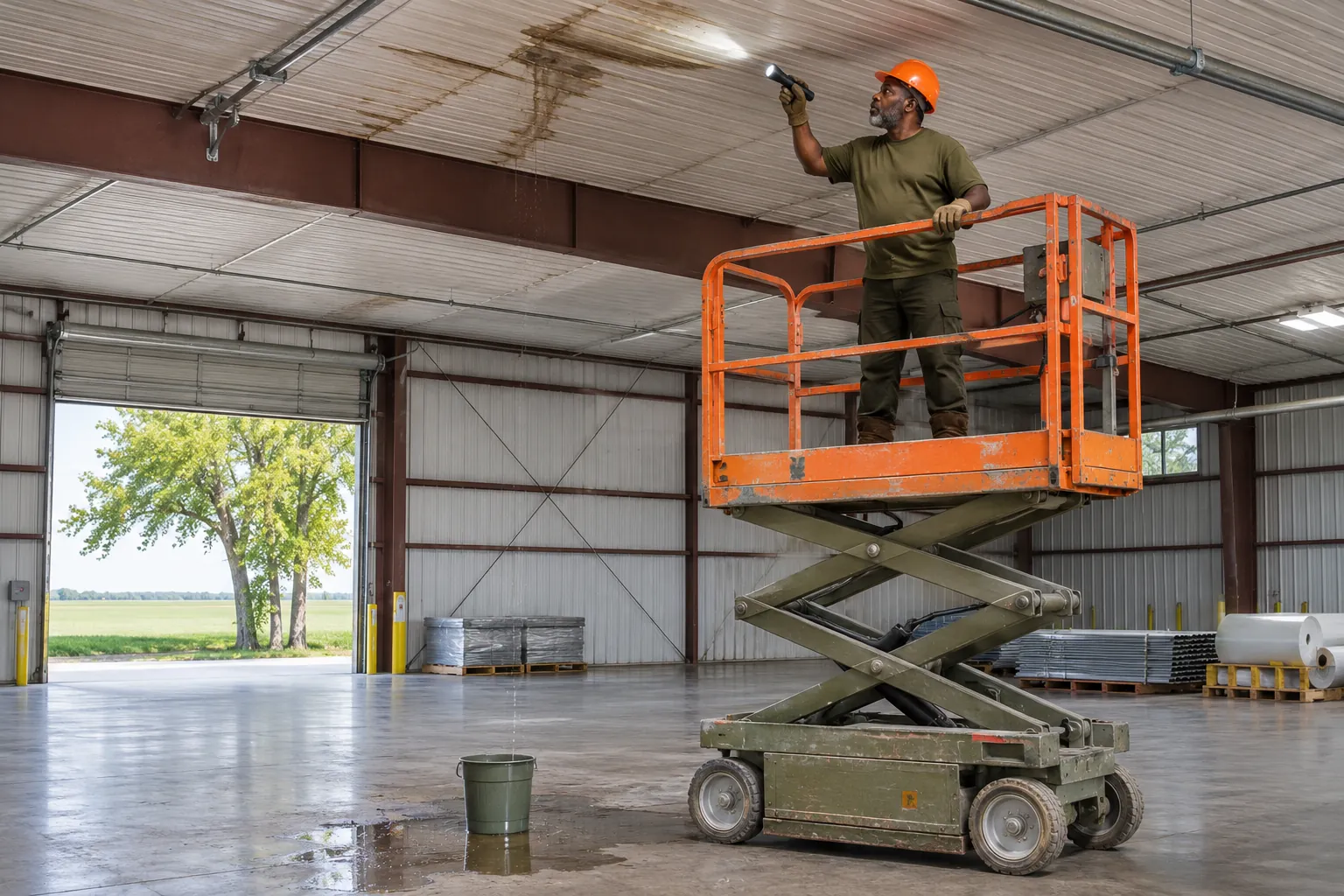
New ceiling stains after a storm, traced back to the impact or opening behind them.
Roof leak repair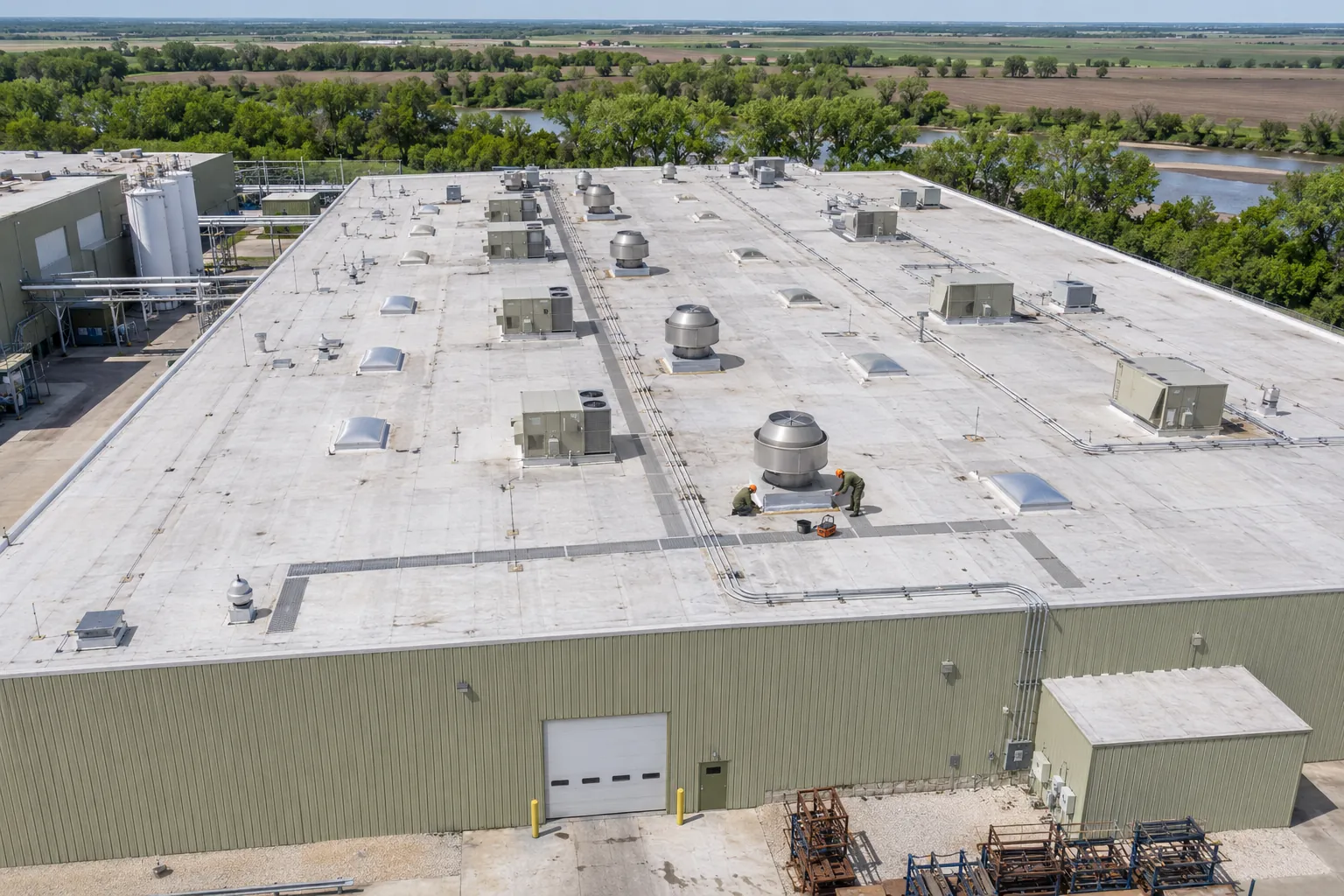
Storm damage at fans, stacks, and equipment supports on plant roofs.
Industrial roof repairCheck inside for new stains, then call us. These details help us plan the storm inspection.
Storm repairs run in two stages: stop the water, then make permanent repairs once the full roof is known.
We walk the full roof, marking hail impacts and loose metal, and check inside for new stains.
Loose edges are secured and openings sealed first, so the next rain stays outside.
Cracked membrane, open laps, and peeled flashing are repaired once the whole roof has been mapped.
Each repair is photographed and added to the dated storm record for your building.
We repair commercial roofs in Minden and in the towns below. For a building outside them, call us or send us a message.
Answers for Minden owners on storm repairs, timing, and finding a contractor close by.
Most storm repairs in Minden involve roof edges, flashing, and seams. Common findings are loose edge metal, punctured membrane, and dented metal panels with cracked sealant at the laps. We secure edges and seal openings first to stop water, then make permanent repairs after the whole roof has been inspected.
Yes. Minden is one of the towns we cover, along with Kearney, Holdrege, Gibbon, Ravenna, and Shelton. Call with the address, the storm date, and what you see, and we will set up an inspection of the whole roof.
We handle hail repairs near Minden. The work starts with a full roof walk to mark each impact on membrane, seams, and metal laps, since many cracks are hard to see from below. Every impact is photographed, and you get a written list separating storm repairs from older wear.
Waiting lets water into the insulation through cracks that are hard to see yet, and wet insulation turns a patch job into a section replacement. Repairing the cracks and laps soon after the storm keeps the scope small. If the full repair has to wait, we seal the openings as a temporary step.
Look for edge metal that is bent, loose, or hanging, coping pieces out of line, and flashing pulled away at walls. Inside, check ceilings near outside walls for new stains. Anything loose at the edge should be secured soon, because a lifted edge catches more wind in the next storm.
Tell us when the storm hit and what you see. We will walk the roof, photograph the damage, and price the repairs.